Chaos Pendulum Double-Wheel Perpetual Motion Machine – Gold
A gold double-wheel kinetic desk sculpture with USB or battery power, tool-free assembly, and a chaotic motion loop.

By Usama Noman
· 6 min read · How we research & rate
Researched from the listing, buyer reviews and videos — not lab-tested.
If you buy through our links, we may earn a small commission. It doesn't change our verdict. How affiliate links work
Expert review
“The Desk Toy That Looks Like It Broke Physics”
So… what is this thing?
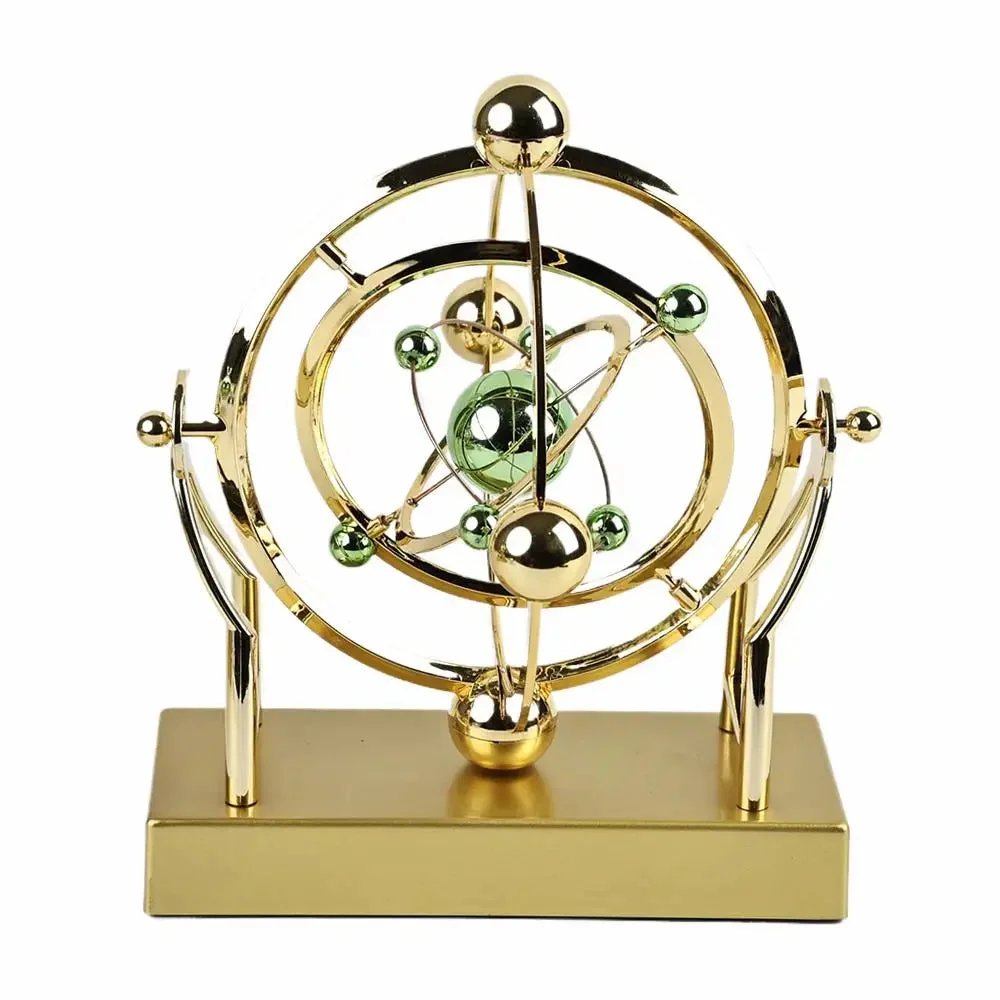
It’s a gold kinetic desk sculpture with two rotating wheels and a pendulum arm that swings in unpredictable loops. You set it on a flat surface, give it a nudge, and it turns your desk corner into a tiny physics show.
The weird part is the name. It calls itself a perpetual motion machine, which sounds like something you’d find in a mad scientist’s junk drawer. In practice, it’s a powered desk toy that keeps moving as long as it has juice.
This is not a perpetual motion machine. It is a kinetic sculpture with a dramatic name, and honestly, that’s still enough to make people stop and stare.
The double-wheel part is what makes it more interesting than a single swinging pendulum. Instead of repeating the same hypnotic arc forever, the two wheels interact and nudge the motion into new paths. One moment it looks organized; the next it looks like a very elegant argument between magnets and momentum.
The finish is gold, which gives it that “executive toy” energy. If you put it beside your monitor, it will look less like clutter and more like a small trophy for surviving meetings. It’s decorative, it’s nerdy, and it’s openly a bit ridiculous. That’s a good combination for a desk.

How does it actually work?
EMPRIS says the toy uses magnetic technology and dual rotating wheels to create its chaotic swinging pattern. The wheels interact, the pendulum responds, and the motion looks different from cycle to cycle.
You’ve got two power options: USB or battery. That means it can live on a desk near a port or sit on a shelf if you’d rather keep cables out of the picture. The listing also says it’s made from ABS plastic and an alloy frame, with a gold-tone finish that leans more “executive desk toy” than “science class prop.”
Setup is deliberately simple. It arrives in kit form and needs self-assembly, but EMPRIS says no tools are required. Once it’s together, you give it a gentle nudge to start the show.
There’s also a nice educational angle here. A toy like this makes ideas like momentum and energy transfer visible instead of abstract. You don’t need to understand the equations to enjoy it, and you don’t need to teach a class to appreciate why the pattern feels alive.
The size keeps it desk-friendly too. EMPRIS lists it at about 9.02 by 8.86 inches, with a base around 2.2 inches wide and a height around 1.26 inches. Translation: it wants a little attention, but it won’t claim your whole workspace.

Why does this exist?
Because some desks need a little chaos, and not the kind that comes from 47 open browser tabs. This is the fun kind: visible, gold, and weirdly calming to watch.
EMPRIS pitches it as a conversation starter and a way to explore momentum and energy transfer. That checks out. There’s something hypnotic about watching two wheels trade motion back and forth, especially when the pattern keeps shifting instead of repeating perfectly.
It also fits the “gift for the person who has everything” niche. It’s not a mug. It’s not a candle. It’s a shiny physics toy that looks expensive and takes up less room than a lunchbox.
The gift angle matters because kinetic sculptures have a way of working across ages. A teenager who likes physics can enjoy it, a teacher can use it as a demo, and a coworker can appreciate it as a desk curiosity. That’s a wider audience than most novelty items get.
And let’s be honest: it’s a good prop. It gives people a safe thing to look at when they walk past your desk, which is much easier than making eye contact before your first coffee.
Who would and would not use it?
This one’s for science fans, desk toy collectors, teachers, and anyone who likes a little movement in their workspace. It’s also a solid pick for a gift swap when you want something that isn’t a stress ball.
It’s recommended for ages 14 and up, so it’s not a toddler toy. If you’re buying for a kid, make sure they’re old enough to enjoy assembly and won’t immediately turn it into a projectile.
It’s less ideal if you like a completely silent, minimalist desk. The motion is the whole point, and the footprint is about 9 by 9 inches, so it wants a little room to perform.
It’s also a better fit for people who enjoy tinkering. If zero assembly sounds like zero fun, look elsewhere. If snapping parts together feels like a warm-up before the main event, you’ll probably like the ritual.
And if you need every desk object to be practical, this may not earn its spot. It doesn’t sort your mail or hold your pens. Its job is to be delightful, and that’s enough.
The practical catch
It needs power, so this isn’t a “set it and forget it” decoration unless you plan for a USB cable or batteries. It also requires assembly, even if no tools are involved.
The name oversells the science. If you want a true perpetual motion machine, this isn’t it—because that’s not how physics works. If you want a gold desk sculpture that looks like it’s arguing with gravity, it absolutely delivers.
Think of it as a decorative toy with a nerdy streak. It won’t make you more productive, but it might make your desk the one people visit when they need a two-second brain break.
The price is another thing to consider. At $93.59, it’s in “nice gift” territory rather than “random desk trinket” territory. That may be fine for a milestone present or a very serious kinetic-art enthusiast, but it’s a lot for a plastic-and-alloy toy.
The smart play is to treat the motion as the feature, not a promise of productivity. If watching two gold wheels bounce through unpredictable patterns sounds relaxing, you’ll get it. If you want stillness, storage, or something that solves a real problem, spend the money on a better chair cushion.
The Good and the Weird
The Good
- Powered motion with USB or battery options
- Tool-free assembly
- Compact footprint for desks and shelves
- Eye-catching gold finish
The Weird
- Assembly required
- Needs USB power or batteries
- Not an actual perpetual motion machine
- No reviews yet
Weirdness Meter
Usefulness Meter
Our verdict
Verdict: Fun Gift
“A silly, shiny physics toy that’s better as a gift or desk spectacle than as a productivity tool.”
Usama Noman
Community ratings
How weird and useful is it to you?
0 votes
Weirdness: No votes yet
Usefulness: No votes yet
Where to get it
Chaos Pendulum Double-Wheel Perpetual Motion Machine – Gold
by EMPRIS
- Sold by
- Official store
- Price
- $93.59
Price as of . Prices change — check the store for the current price.
We may earn a small commission. How this works
Questions people ask
It supports USB or battery power, so you can use it at a desk or on a shelf without a dedicated port.
Yes. It arrives in kit form and needs simple self-assembly, but EMPRIS says no tools are required.
No. It’s a powered kinetic desk sculpture. The motion depends on USB or battery power, not on breaking the laws of physics.
EMPRIS recommends it for ages 14 and up.