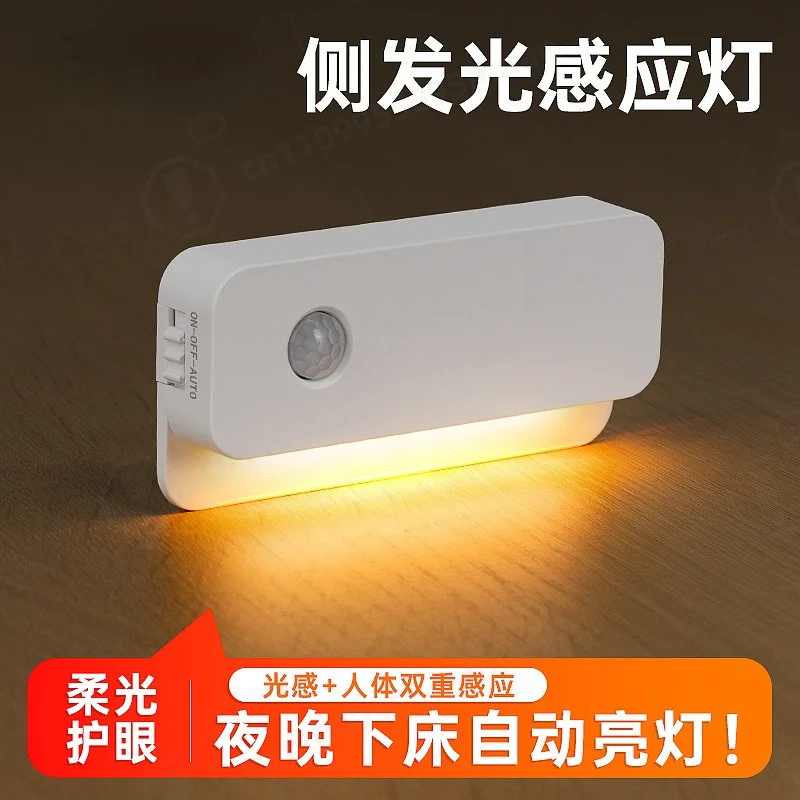
Motion Sensor LED Light Rechargeable Wireless Stair Cabinet Lamp Magnetic Night Light No Wiring
A magnet-mounted, USB-rechargeable light that watches for movement and switches on where you're. No wiring, no switch, no fuss — just battery homework.

By Usama Noman
· 6 min read · How we research & rate
Researched from the listing, buyer reviews and videos — not lab-tested.
If you buy through our links, we may earn a small commission. It doesn't change our verdict. How affiliate links work
Expert review
“A Motion Sensor Light That Wires Itself To Nothing”
What's this thing?
It's a product in the simplest possible terms: a rechargeable light that switches itself on when you walk past.
The Motion Sensor LED Light Rechargeable Wireless Stair Cabinet Lamp Magnetic Night Light No Wiring is sold by CraftedVibe Store for $11.59, listed against an original $24.15.
What makes it unusual is that it removes the two things people hate about lighting. The first is wiring, which is why so many dark cupboards and stairwells stay dark. The second is the switch, which is why so many lights stay on all night. A light that installs itself with a magnet and runs itself on a detector isn't just convenient, it's a different relationship with light: you stop managing it and it starts anticipating you.
Buyer evidence is thin: the listing shows only 0 sold and no rating at all.
The unexpected part is how quickly a person stops noticing it. A normal lamp is a decision you make. A motion light is a decision you never make, and after a week your brain stops counting it as a light at all and simply files it under "the stairs are visible now". It disappears into the house, which is about the highest praise a gadget can get.

How does it work?
Products like this work the way this whole class of gadget has always worked: a passive infrared sensor watches for body heat moving across its field and trips the LEDs, and a magnet on the back lets the whole unit stick to metal without any wiring
Motion lighting is built on a very old and very cheap sensor. A passive infrared detector is a lens looking at two beams, and it does nothing at all until warm mass crosses from one beam into the other. Body heat, moving, is the trigger, so the light stays dark for a gust of wind and for the cat, and fires for a person. On top of that sits the power design. A mains light is easy to run and hard to install, so the cordless version flips the trade: it runs on an internal cell, charges through USB, and instead of being wired in place it's held by a magnet. The magnet is the quiet genius of the whole category, because it means the light can be pulled off a metal frame in half a second and parked somewhere else, and the sensor means you never have to find a switch.
The catch is chemistry. A rechargeable motion light is the most honest product in the house, because a detector that wakes on every footstep spends charge every time it fires, and a busy hallway will empty a small cell in a fortnight. That's not a fault, it's arithmetic, and it's worth knowing before you screw one inside a cupboard and forget it. Sensitivity is the second variable. A sensor that's too keen fires at the cat; too dull and you get the dark fumble it was supposed to prevent. There's no published sensor range, delay or brightness here, and no rating or sales record either, so the unit is the specification.
Why does this thing exist at all?
The reason it exists is almost embarrassingly practical: most dark corners in a home are dark because nobody wants to run a cable to them
Look at where the genuine light shortages are and none of them are about brightness. The stairwell you only cross to get to the bathroom at night. The under-stair cupboard with the fuse box. The wardrobe, the shed, the boot of the car, the inside of a dark cabinet. Every one of those places is dark for the same boring reason: it would mean a cable, a switch and a hole in something structural, to light a space nobody stands in for more than ninety seconds. A cordless unit with a magnet and a detector erases all three objections at once. It also solves the night problem, which is different. A normal switch light at three in the morning is a punishment: you wake up, you flood the room, and you lie there afterwards staring at the ceiling. A light that comes on dim, only where you're, only when you move, lets you cross a dark landing and go back to sleep, and that's a small, real improvement in a part of the day most lighting ignores completely.
Who on earth needs this?
Good fit:
- Night-time stair and hallway users who want light without the switch
- Renters who can't run cables or cut into walls
- Cupboard, wardrobe and shed owners with no power nearby
- Car, van and boot users who want light where the wiring isn't
Not for you if you want a permanent fixture. A rechargeable unit needs charging, and in a busy corridor that's a recurring job, not a one-off installation.
It's also a poor fit if you want a bright working light. This is a convenience light for moving through a space, not a lamp for reading or working, and the seller publishes no brightness figure. Expect enough to see your feet, not enough to paint by.
The trade-off
Every product this specific has trade-offs, and they're worth facing before you press buy.
- Rechargeable means a chore, not a fixture. Every trigger spends charge. In a busy spot you'll be charging it monthly, and the seller publishes no run time.
- Sensitivity is fixed and unknown. No stated range or delay means you find out by living with it whether it over-triggers or under-triggers.
- Magnet mounting needs metal. Sticking it to plaster or tile needs a plate or a screw, so check the surface before you plan the spot.
- No sales record. There's no rating and no volume here, so the only evidence is the seller's own description.
For a few pounds and no wiring at all, the bargain holds up. If the job is a dark stair, a lost cupboard or a midnight crossing, this is the least invasive light you can buy. Treat the charging as the cost of doing business and it earns its spot.
The Good and the Weird
The Good
- No wiring and no switch: it installs and runs itself
- Magnetic back lets it be moved or borrowed in seconds
- USB-rechargeable instead of disposable batteries
- Ideal for stairs, cupboards and night-time crossings
The Weird
- Every trigger costs charge, so recharging is recurring
- No published sensor range, delay or brightness
- Magnet mounting needs a metal surface or a plate
- No rating or sales record to judge it by
Weirdness Meter
Usefulness Meter
Our verdict
Verdict: Why Though?
“A genuinely useful little fixture: it removes wiring and switches from places that have neither. Just budget for recharging, because every footstep costs charge.”
Usama Noman
Community ratings
How weird and useful is it to you?
0 votes
Weirdness: No votes yet
Usefulness: No votes yet
Where to get it
Motion Sensor LED Light Rechargeable Wireless Stair Cabinet Lamp Magnetic Night Light No Wiring
- Sold by
- Online store
- Price
- $11.59
Price as of . Prices change — check the store for the current price.
We may earn a small commission. How this works
Questions people ask
No. It charges over USB and then runs cordless on its internal cell, so there's no permanent cable. It sells for $11.59.
A motion sensor watches for movement and trips the light. That also means busy spots will drain the charge faster than quiet ones.
The magnet back makes sense on metal. On plaster, tile or wood you'll need a plate or a screw, so check the surface first.