The Travel Bag You Roll Like a Pastry
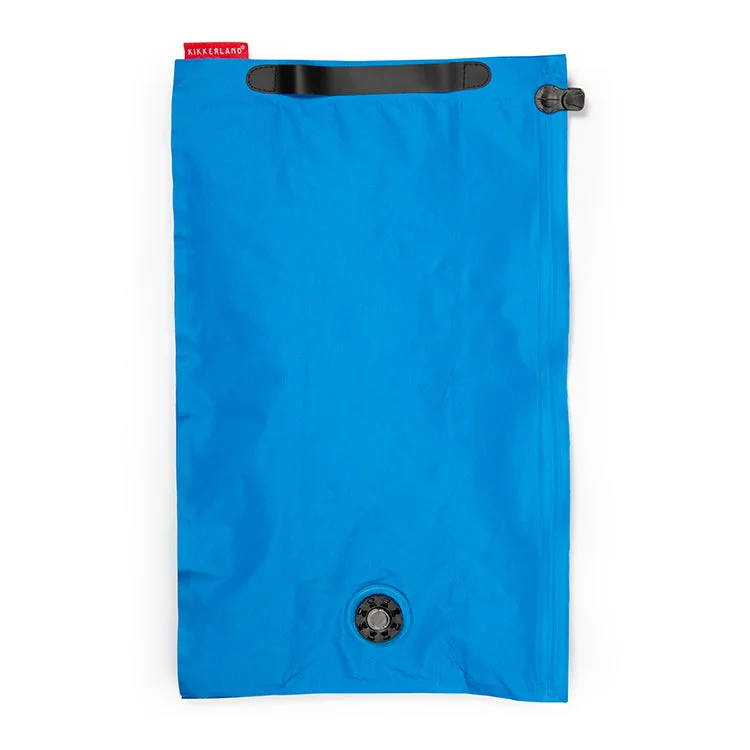
Kikkerland’s Compression Pouch squeezes clothing smaller by rolling the air out through a duct. It is a low-tech answer to the high-stakes problem of one more sweater.

By Maya Okafor
· 5 min read
If you buy through our links, we may earn a small commission. It doesn't change our verdict. How affiliate links work
What is this thing?
The Compression Pouch is a soft travel bag for clothing that tries to make a suitcase feel less like a closing contest. Instead of relying on a pump or a rigid case, you put clothes inside, close the pouch, open its air duct, and roll the bag. The rolling motion presses air out; once the pouch is flatter, you lock the duct. The maker describes it as extra strong and waterproof, and lists pongee, nylon, and PE as the materials.
Its visual hook is simple: luggage storage with a built-in disappearing act. A pile of clothes goes in, then the pouch gets rolled into a tighter parcel. Kikkerland says the design reduces space by 70%, which is a maker claim rather than an independently measured result. The listed size is 11.75 by 19.25 by 6.25 inches, so it is large enough for a useful clothing bundle without pretending to be an entire suitcase.
I like any product that turns packing into a small wrestling match with physics. The moment the pouch starts rolling, I imagine my socks forming a committee and voting to stay home. Honestly, that may be the most peaceful part of the trip.
How does it actually work?
The mechanism is clear. Place clothing inside the pouch and close it. Open the air duct, then roll the pouch so trapped air is pushed toward the outlet. When the pouch reaches the shape you want, lock the air duct to seal it. There is no electrical control, battery, vacuum pump, or special refill described on the listing.
That makes the important buyer question less about gadget compatibility and more about technique. The contents need to fit inside the stated dimensions, and the bag needs enough room to close before rolling. The maker lists pongee, nylon, and PE, and calls the pouch waterproof. Those are listing details, not a promise that every packed item will stay dry in every travel situation. The page is also extra strong, but gives no load limit or test standard.
A useful demonstration would show the same clothing bundle before and after rolling. The visual change explains the product faster than a paragraph, while also making clear that compression is manual and depends on how the pouch is filled.

Why does this exist?
Packing cubes organize. Vacuum bags compress. This pouch sits between those ideas and removes the need to carry a pump. That is useful for travelers who want to reclaim suitcase space without another powered accessory, or for outdoor trips where a soft, rollable bag is easier to tuck into a larger pack.
The product is a small example of practical weirdness: the solution is not a smart app, just an air duct and a rolling action built into a clothing bag. It gives a familiar chore a visible before-and-after moment, which is why it has better demonstration potential than a plain storage sack. The user can see the air leave and the bundle change shape.
The pouch exists because luggage always discovers a new law of nature on the return trip. I picture the suitcase watching this roll-up maneuver and quietly realising it has lost negotiation power. No one gets hurt; one cardigan simply has to share a room with the hiking socks.
Who would use it, and what is the catch?
This is for travelers who pack soft goods, campers who want a compact clothing bundle, and anyone who prefers a manual solution with no pump to misplace. It may suit people who like seeing a storage problem solved physically: fill, roll, lock. The waterproof-material claim could be appealing outdoors, although the listing does not spell out a waterproof rating or promise submersion protection.
It is less compelling for someone who already has enough suitcase room, dislikes rolling bags by hand, or needs exact compression numbers for a tightly planned loadout. The pouch is not presented as a replacement for a suitcase organizer, garment folder, or dry bag with a stated protection rating. Buyers should measure their routine against the listed dimensions rather than assume every bulky item will fit.
The maker page shows the product in stock at $15.00 and invites customers to write the first review, so buyer feedback was unavailable on the listing. The practical catch is that the pouch still asks you to do the work: choose what to pack, close it without overfilling, roll it firmly, and lock the duct. It saves you from carrying a pump, not from understanding your suitcase. Shipping is calculated at checkout and varies by destination. If you want a low-tech packing trick with a visible transformation, this is a smart little oddity. If you want quantified performance or certified waterproofing, the listing does not provide enough evidence to promise those things.
The Good and the Weird
The Good
- Rolls air out without a pump
- Reusable soft pouch for clothing
- Distinctive before-and-after packing demo
The Weird
- No load limit or compression test is listed
- The 70% reduction is a maker claim
- Shipping cost depends on destination
Weirdness Meter
Usefulness Meter
Our verdict
Verdict: Genius
“A clever manual compression trick for people who want more packing room without carrying a pump. The maker’s performance claim needs to be treated as a claim, but the mechanism and use case are easy to understand.”
Maya Okafor
Community ratings
How weird and useful is it to you?
0 votes
Weirdness: No votes yet
Usefulness: No votes yet
Where to get it
Compression Pouch
by Kikkerland
- Sold by
- Official store
- Price
- $15.00
Price as of . Prices change — check the store for the current price.
We may earn a small commission. How this works
Questions people ask
No pump or battery is described. The listing says to open the air duct, roll the pouch to press out air, and lock the duct.
The maker lists pongee, nylon, and PE.
Kikkerland describes it as waterproof, but the listing does not provide a waterproof rating or submersion guidance.