This Frame Makes Real Flowers Look Like Slow Motion
It uses vibration and a strobe light to turn lightweight objects into a mesmerizing desktop display.

By Maya Okafor
· 6 min read
If you buy through our links, we may earn a small commission. It doesn't change our verdict. How affiliate links work
What is this thing?
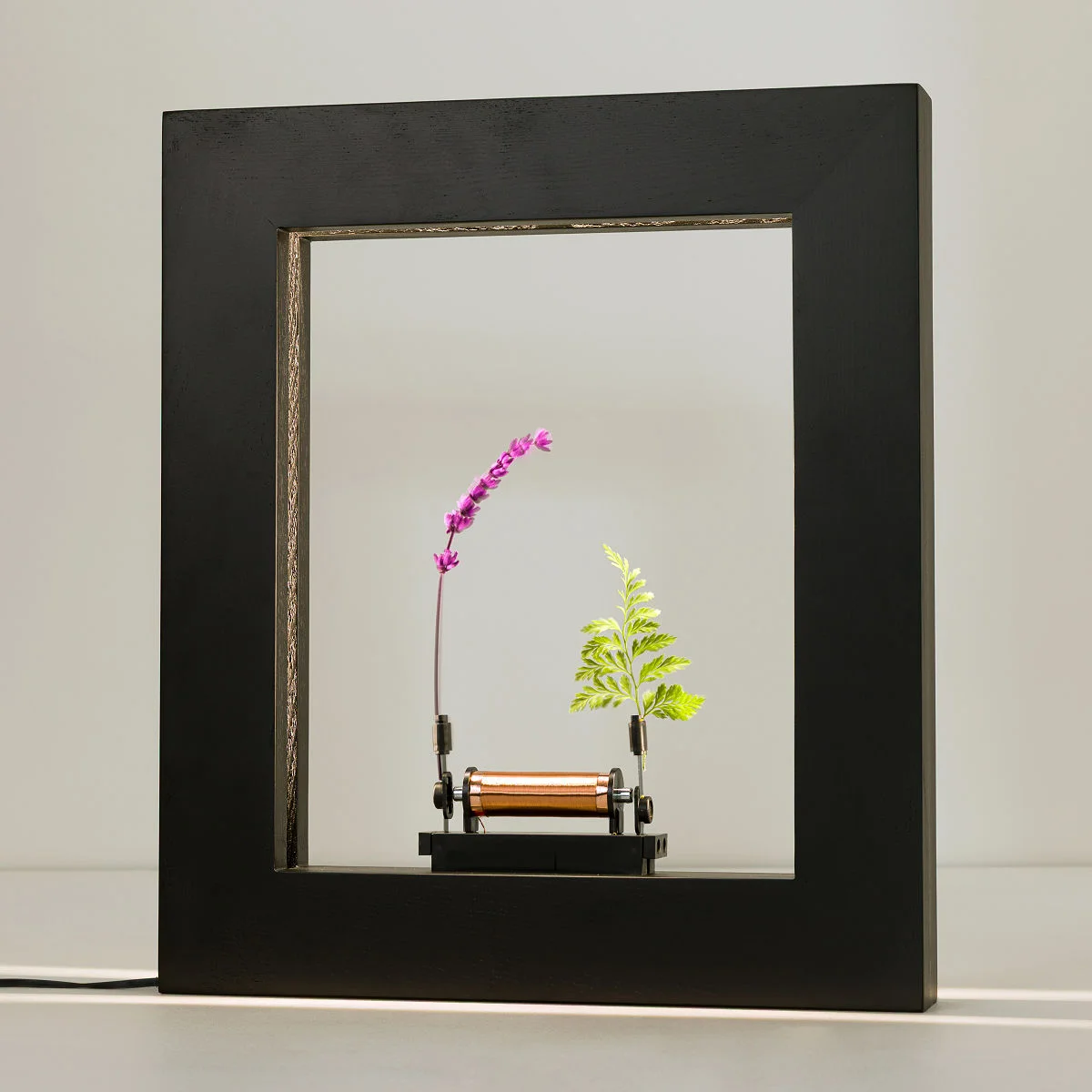
The Slow Motion Art Frame is a powered display that makes real, lightweight objects appear to float, dance, or move in slow motion. The listing suggests using flowers, greenery, or origami. The important detail is that the effect is not a video playing on a screen. You place a physical object inside the solid-wood frame, switch it on, and the combination of movement and light creates an optical illusion.
That makes the frame unusual in a very literal way. A normal picture frame freezes a moment. This one turns a flower or paper shape into a tiny stage performance. It is part decor, part physics demonstration, and part “please stand here while I show you the weirdest thing on my shelf.”
The product costs $399, so it sits firmly in conversation-piece territory rather than impulse-gift territory. The listing presents it as an object for changing arrangements: swap in a new lightweight subject and the same frame can reveal a different moving scene.
Its visual hook is immediate. A still flower seems to move impossibly slowly, and the viewer has to look twice to understand that the object itself is real.

How does it actually work?
According to the listing, the frame synchronizes high-speed vibrations with a strobe that blinks 80 times per second. The vibration moves the lightweight object, while the timed light makes that motion appear much slower to the eye. Because the effect depends on the subject being light, the seller specifically recommends plants, flowers, origami, and similarly lightweight objects.
There are four movement modes: Super Slow Motion, Slow Motion, Pop and Lock, and Double Trouble. A brightness control adjusts the light level. The frame includes a US-compatible power adapter, a wall-mounting hook, and optional feet for stability on a flat surface. The body is made from solid wood.
The setup is therefore more deliberate than hanging a picture. You need a suitable object, a stable location or wall, a power outlet, and enough room to see the effect. The page does not say that every flower or paper shape will work equally well, so the best result should be treated as dependent on the chosen object and arrangement.
The seller’s description explains the physics in broad terms, but it does not provide dimensions, wattage, or an exact weight limit in the accessible listing text. Those are sensible details to confirm before purchase, especially at this price.
Why does this exist?
Because people like ordinary objects with an impossible-looking twist. A flower in a vase is familiar. A flower that appears to hover and drift in slow motion is a small mystery, and mysteries make excellent conversation pieces. The frame also gives a maker or decorator a changing canvas: seasonal greenery, a folded paper shape, or a new arrangement can alter the display without replacing the device.
There is a credible practical use for visual environments that benefit from calm movement. A studio, reading corner, creative workspace, or reception area could use an eye-catching display that does not require a screen full of content. It may also appeal to someone who enjoys science demonstrations and wants the mechanism visible enough to discuss.
The product is not presented as a therapeutic device, and the listing does not establish health or productivity benefits. The safest interpretation is decorative entertainment with a physics-based visual effect. That is enough: not every weird object needs to solve a major problem if it makes people stop and look.
For a short video, the reveal is strong. Start with a normal flower, cut to the powered frame, switch modes, and explain that the flower is real. The question practically writes itself: “Is this video edited, or is the frame doing something strange?”

Who would use it—and who would not?
This is for someone who wants a statement piece and enjoys changing displays. A plant lover, paper artist, science fan, museum-shop shopper, or design-minded host could appreciate the combination of physical materials and optical illusion. It may suit a workspace or living room where guests can see it, provided the owner has an outlet and a stable place to install it.
It is not for someone seeking inexpensive wall art, silent decor, or a completely passive object. The frame needs power and a suitable lightweight subject. Buyers who expect to put a heavy sculpture, dense bouquet, or any random object inside should pause: the seller’s guidance is specifically about lightweight items. The missing dimensions and weight limit are also reasons to ask questions before ordering if the intended display is unusual.
At $399, the concrete buyer decision is whether the visual effect will be used often enough to justify a premium conversation piece. If the answer is yes, the reconfigurable display is the point. If the answer is no, a normal frame—or a small lamp—will be much easier to justify.

What buyers say—and what is the catch?
The accessible product listing showed no customer reviews so buyer feedback was unavailable. That leaves several practical questions open: how much noise the vibration makes, how warm the unit becomes, how easy it is to position an object, and how convincing the effect looks in different lighting. Those questions should not be filled in with assumptions.
The catch is the combination of price, power, and subject selection. The frame is expensive at $399, and it needs a US-compatible power adapter. The optical trick is designed for lightweight objects, so the buyer is also purchasing a small curation hobby: finding, arranging, and replacing pieces that respond well to the effect. The page gives four modes and brightness control, but it does not provide all technical measurements in the accessible copy.
The verdict is enthusiastic but narrow. This is a premium visual oddity for people who want a real object to look digitally impossible. It is not a practical necessity, and it should be bought for the spectacle rather than a promise of productivity or wellness.
If the buyer wants a display that makes visitors ask, “How is that moving?”, this frame has a clear reason to exist. If they want simple decor with no setup, it is the wrong kind of strange.
The Good and the Weird
The Good
- Real objects create a striking optical illusion
- Four movement modes and brightness control
- Can be refreshed with new lightweight arrangements
The Weird
- High $399 price
- Requires power and suitable lightweight subjects
- Listing leaves dimensions and weight limit unclear
Weirdness Meter
Usefulness Meter
Our verdict
Verdict: Why Though?
“A genuinely strange, visually memorable display—but a luxury curiosity. The physics-based effect is compelling; the price and setup make it a deliberate splurge.”
Maya Okafor
Community ratings
How weird and useful is it to you?
0 votes
Weirdness: No votes yet
Usefulness: No votes yet
Where to get it
Slow Motion Art Frame
by Uncommon Goods
- Sold by
- Online store
- Price
- $399.00
Price as of . Prices change — check the store for the current price.
We may earn a small commission. How this works
Questions people ask
The listing says it uses real lightweight objects, high-speed vibrations, and a synchronized strobe to create the appearance of slow motion.
The seller says it works best with lightweight objects such as plants, flowers, and origami. A general weight limit was not listed in the accessible product copy.
Yes. The frame includes a US-compatible power adapter.
The listing names four: Super Slow Motion, Slow Motion, Pop and Lock, and Double Trouble. It also includes brightness control.