Storm Cloud
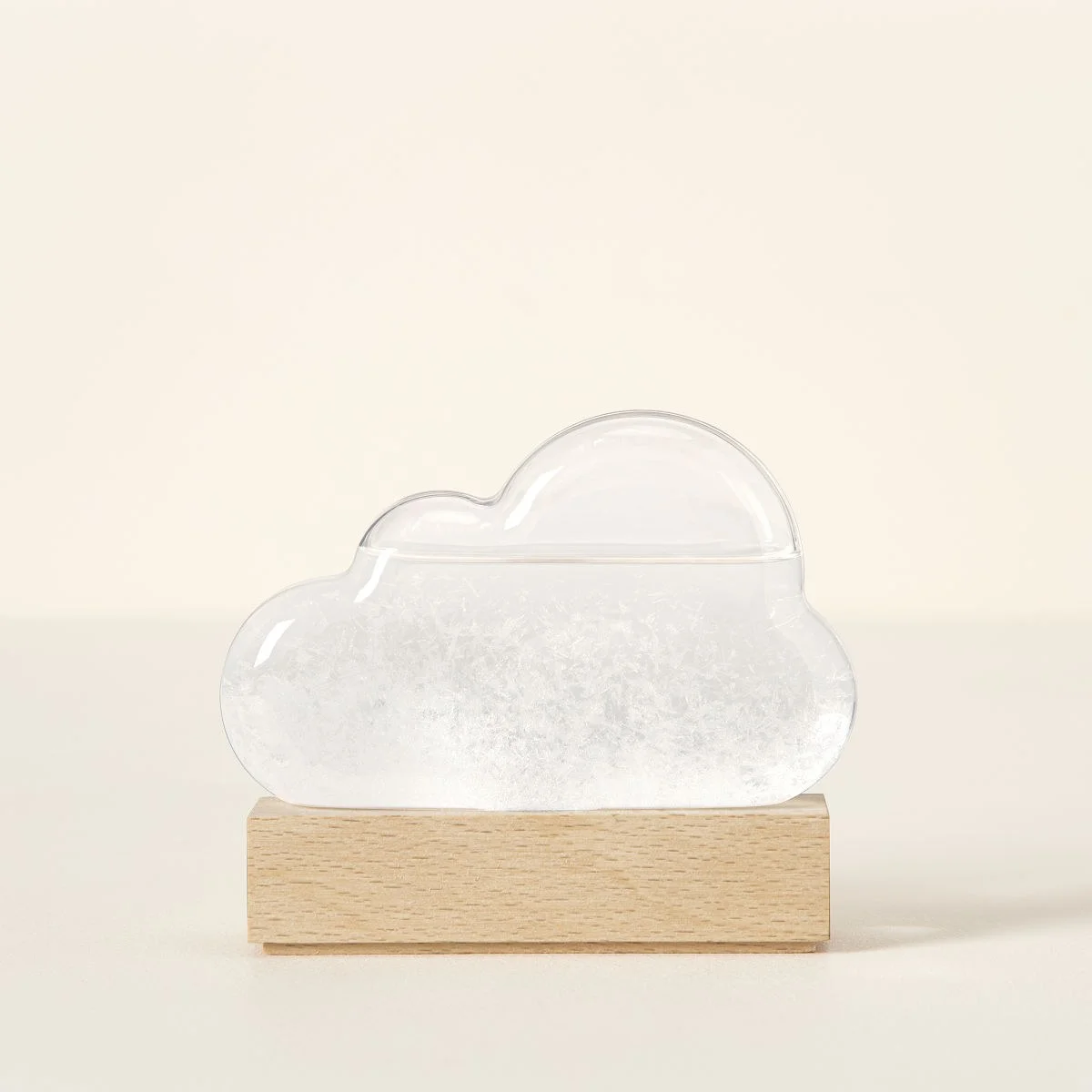
A cloud-shaped glass storm glass filled with a liquid that forms changing crystal patterns. It's based on a 19th-century weather predictor and makes a beautiful, slightly mysterious ornament.
By Maya Okafor
· 4 min read
If you buy through our links, we may earn a small commission. It doesn't change our verdict. How affiliate links work
Expert review
“A Glass Cloud That Grows Crystals When the Weather Changes (Allegedly)”
So… what is this thing?
It's a little glass cloud on your shelf. Inside is a clear liquid that grows feathery crystals, clears up and grows them again, as the weather changes.
The Storm Cloud, sold by Uncommon Goods, is a modern take on the storm glass, a sealed glass vessel filled with a special liquid that crystallises into different patterns. Uncommon Goods says the patterns change with the air pressure. One reseller notes it sits on a wooden base. It costs about $30.
Storm glasses have a lovely history: Uncommon Goods credits Robert FitzRoy, captain of HMS Beagle (the ship that carried Charles Darwin) and a pioneering meteorologist, with popularising them. Nobody knows who actually invented them.
It's half science instrument, half ornament, and completely mesmerising.
How does it actually work?
A traditional storm glass contains a solution of chemicals such as camphor dissolved in alcohol and water. As conditions around it change, some of the chemicals come out of solution as crystals, then dissolve again.
Traditionally, people "read" the glass like this:
- Clear liquid: fair weather.
- Cloudy liquid: cloudy or rainy weather.
- Small stars or dots: possible thunderstorms.
- Large flakes or feathery crystals: cold weather or snow.
- Crystals at the top: windy weather.
Here's the honest bit: scientists today generally believe storm glasses react mostly to temperature, not to air pressure, which is why they're not a reliable forecast. Uncommon Goods itself says storm glasses are no longer a practical weather predictor, but remain popular as decor and gifts.
That doesn't make it any less fun to watch. The crystals really do change, often beautifully, and checking on your cloud each morning becomes a little ritual.
Why does this exist?
Because before satellites and weather apps, sailors and scientists tried all sorts of ways to predict storms, and the storm glass was one of the prettiest.
Today it's a piece of history you can keep on your desk. And shaping it like a cloud is a perfect touch: it looks like weather, it hints at weather and it changes like weather, even if you should probably still check the forecast before a picnic.
There's something calming about owning an object that slowly changes on its own. No batteries, no screen, no notifications, just crystals quietly forming and dissolving. It's a nice antidote to a world where everything else is glowing and buzzing.

Who on earth needs this?
Good fit:
- Weather nerds and amateur meteorologists.
- Science and history fans, especially anyone who loves the story of Darwin and the Beagle.
- Desk and shelf decorators who like unusual objects.
- Kids curious about crystals, with adult supervision.
- Gift givers looking for something calm, beautiful and a bit mysterious.
Skip it if you want a real weather forecast, you have curious pets or toddlers who might knock glass over, or you prefer decor that doesn't change.
Tips for the best crystals
- Keep it out of direct sunlight and away from radiators, which can stop crystals forming.
- Give it time. Crystals can take days to settle after the glass is moved or delivered.
- Don't shake it. Leave it undisturbed.
- Try a cooler spot, like a windowsill, for more dramatic patterns.
- Keep a diary of the crystals and the weather, and see if your cloud matches the forecast.
- Handle it carefully. It's glass and the liquid is not for drinking.
The catch
- It's decor, not a forecast. Don't cancel your plans because of the crystals.
- Glass is fragile.
- Crystals need patience. Patterns can take a while to appear after it's moved.
- Results depend on where you keep it.
For about $30, it's a beautiful, calming bit of science history that changes every day, and a lovely conversation piece, even if your weather app is still more accurate.

The Good and the Weird
The Good
- Beautiful, ever-changing crystal patterns
- Charming cloud-shaped design
- Fascinating 19th-century history
- Great desk or shelf ornament
- Calming to watch
The Weird
- Not a reliable weather forecast
- Glass is fragile
- Crystals need time to form
- Results depend on location
Weirdness Meter
Usefulness Meter
Our verdict
Verdict: Fun Gift
“A wonderfully specific bit of weirdness: a glass cloud that grows crystals, inspired by a sailor's weather instrument.”
Maya Okafor
Community ratings
How weird and useful is it to you?
0 votes
Weirdness: No votes yet
Usefulness: No votes yet
Where to get it
Storm Cloud
by Uncommon Goods
- Sold by
- Online store
- Price
- $30.00
Price as of . Prices change — check the store for the current price.
We may earn a small commission. How this works
Questions people ask
Not reliably. Storm glasses are thought to react mostly to temperature, and Uncommon Goods says they're no longer a practical weather predictor. Treat it as decor.
A sealed liquid solution forms crystals that dissolve and reform as conditions change, creating different patterns.
Nobody knows for sure, but Robert FitzRoy, captain of HMS Beagle, helped popularise it.
Somewhere stable, out of direct sunlight and away from radiators, where it won't be disturbed.